Can You Actually Tighten Loose Skin Without Surgery After Ozempic?
Everyone wants to skip surgery. Some people can. Most can't. Here's how to know which category you're in — and what's actually worth trying first.
This is the first thing everyone Googles. Before looking into tummy tucks or body lifts, you want to know if there's a way to fix the loose skin without surgery. Less risk, less money, less recovery time. Makes sense.
Here's the honest answer: it depends entirely on how much loose skin you have and where it is. Non-surgical treatments can meaningfully improve mild laxity. They cannot fix significant sagging. Knowing the difference before you spend $5,000–$10,000 on treatments that won't work for your situation will save you money, time, and frustration.
First: how to tell if your loose skin is mild, moderate, or significant
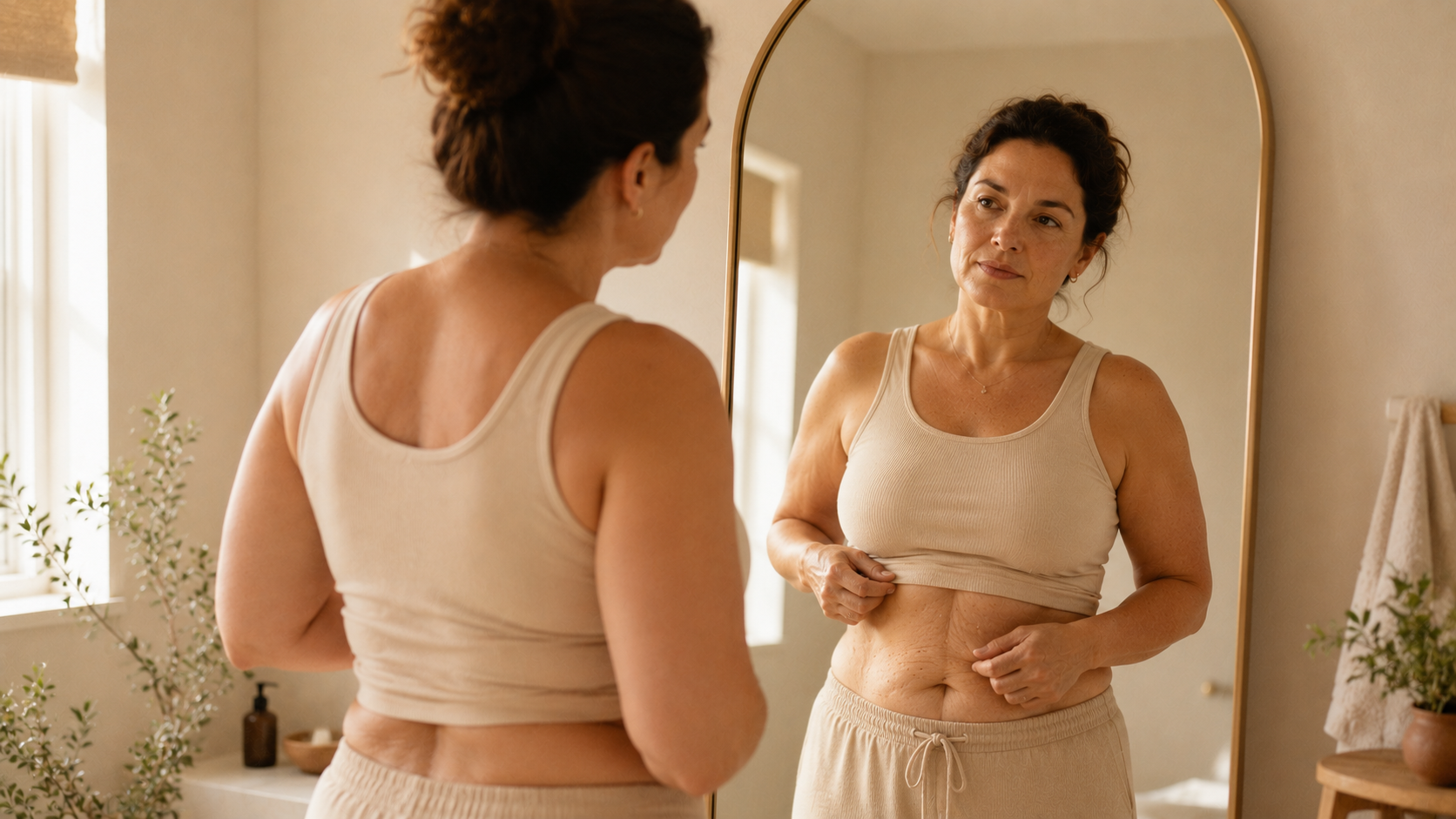
Stand in front of a mirror. Grab the loose skin on your stomach with your hand. This tells you what category you're in:
Mild — The skin feels thin and crepey but doesn't fold over or hang. When you pinch it, it's a thin layer. It looks loose when you sit down but mostly smooths out when you stand. You might describe it as "not tight" rather than "saggy."
Moderate — The skin folds slightly when you sit. You can grab a handful but it doesn't hang down on its own. Standing up, you still see visible looseness that won't go away with exercise. Your arms might jiggle when you wave, your inner thighs rub together with extra skin.
Significant — The skin hangs. You have a visible fold or "apron" on your abdomen. Your arms drape when you lift them. The skin may cause functional problems such as chafing, irritation, or rashes underneath the folds.
One important note: the amount of excess skin matters more than the number of pounds you lost. Some people develop significant laxity after losing 40 pounds, while others maintain relatively good skin tightness after losing much more.
The honest rule: Non-surgical treatments can meaningfully improve mild laxity and may help some moderate cases. If your skin hangs, folds, or causes physical symptoms, surgery is usually the only option that can remove the excess tissue and produce a dramatic improvement. No device, cream, or treatment can remove excess skin that's already there.
What actually works without surgery
These are the treatments with real clinical evidence behind them. They work by stimulating your body's own collagen production, which gradually tightens and firms the skin over weeks to months. None of them are instant, and none of them are as dramatic as surgery — but for the right candidate, they make a real difference.
Radiofrequency microneedling (Morpheus8, Fractora, Vivace)
How it works: Tiny needles pierce the skin while delivering radiofrequency energy into the deeper layers. This controlled injury stimulates your body's healing response and encourages new collagen and elastin production. The result is firmer, tighter, smoother skin over the following months.
What it's best for: Mild to moderate laxity on the face, neck, jawline, abdomen, and arms.
What to expect: 3–4 sessions spaced 4–6 weeks apart. Each session takes 30–60 minutes. Downtime is typically 2–5 days of redness and mild swelling. Results build gradually, with improvement often becoming noticeable after several weeks and continuing for months.
Cost: $700–$1,500 per session for the face. $1,500–$4,000 per session for larger body areas.
Patient experience: Morpheus8 consistently receives strong patient reviews and is one of the most commonly recommended non-surgical skin-tightening treatments.
The catch: It can improve skin quality and mild looseness, but it cannot reproduce the results of surgery for significantly hanging skin.
Ultrasound skin tightening (Ultherapy, Sofwave)
How it works: Focused ultrasound energy heats targeted tissue beneath the skin, stimulating collagen production over time.
What it's best for: Mild lifting and tightening of the brow, chin, neck, and jawline.
What to expect: Usually one treatment session. Results develop gradually over several months.
Cost: $2,000–$5,000 depending on the area treated.
Patient experience: Satisfaction can be variable. Some patients see noticeable improvement, while others experience only subtle changes.
The catch: Results are generally modest and work best for mild laxity rather than significant loose skin.
Biostimulatory injectables (Sculptra, Radiesse)
How they work: Rather than simply adding volume, these injectables stimulate collagen production over time. Sculptra uses poly-L-lactic acid, while Radiesse uses calcium hydroxylapatite.
What they're best for: Facial volume loss after weight loss, crepey skin of the neck and chest, and mild skin quality concerns.
What to expect: Multiple treatment sessions over several months, with gradual improvement.
Cost: Sculptra typically ranges from $3,000–$6,000 for a treatment series.
The catch: These treatments are most useful for the face and certain upper-body areas. They are not a meaningful solution for significant abdominal, thigh, or arm skin laxity.
Collagen supplements
Some studies suggest collagen peptides may modestly improve skin hydration and elasticity, but evidence that they meaningfully improve established loose skin after major weight loss remains limited.
Red light therapy
Some evidence supports red light therapy for skin quality and collagen stimulation, but evidence for meaningful improvement in post-weight-loss skin laxity remains limited. It's best viewed as a supplemental treatment rather than a primary solution.
What doesn't work — despite what the internet tells you
Skin tightening creams and serums. No topical product has ever been clinically shown to tighten loose skin. Products containing retinol, peptides, or caffeine can mildly improve skin texture and surface appearance, but they cannot rebuild the collagen and elastin structure that's been damaged by stretching. If a cream could do what Morpheus8 does, Morpheus8 wouldn't exist.
Dry brushing and body wraps. These temporarily improve circulation and may reduce the appearance of cellulite for a few hours. They have zero effect on skin laxity. The "tightening" effect from body wraps is mild dehydration — it reverses as soon as you drink water.
Ab exercises and core workouts. Building muscle underneath loose skin can improve how your midsection looks in clothes by providing more structure. But exercise cannot shrink excess skin. If the skin is loose, it stays loose regardless of how strong your abs are underneath. Exercise is important for health and for maintaining your weight loss — just don't expect it to replace skin removal.
The honest math most people don't do
Non-surgical treatments aren't cheap. Here's what a realistic treatment plan might cost for someone dealing with post-weight-loss concerns affecting the abdomen, arms, face, and neck:
Morpheus8 for abdomen and arms (3 sessions): $6,000–$12,000
Sculptra for face: $3,000–$6,000
Ultrasound tightening for neck and chin: $2,000–$4,000
Total: $11,000–$22,000
And that's for mild to moderate improvement that may require maintenance over time.
Compare that to a tummy tuck ($8,000–$15,000), which removes excess abdominal skin and typically provides long-lasting results, or a body lift ($15,000–$35,000), which addresses multiple areas in one procedure.
Some patients pursue non-surgical treatments first and later decide that surgery better matches their goals. Others are satisfied with the improvement they achieve without surgery. The key is matching your expectations to the severity of your skin laxity.
How to decide: non-surgical or surgical?
Non-surgical treatments make sense if:
• Your skin is mildly loose and primarily affects texture rather than causing folds or hanging tissue.
• You have relatively good skin elasticity.
• Your main concern is facial volume loss or mild skin laxity.
• You want gradual improvement with minimal downtime.
• You're comfortable with maintenance treatments.
Surgery makes sense if:
• Your skin hangs, folds, or causes irritation, rashes, or chafing.
• You have significant excess skin on the abdomen, arms, thighs, or torso.
• You want the most definitive treatment option with results that are generally long-lasting.
• You've compared the cost of repeated non-surgical treatments with a surgical solution.
The middle ground
Start with one area and assess your response. If you're unsure, consider treating your area of greatest concern first. If you see meaningful improvement, you can continue. If not, you'll have more information about whether surgery may be a better fit.
Some surgeons may apply consultation fees toward a future procedure, though policies vary by practice.
You can also combine approaches. Many patients choose surgery for areas with significant excess skin and non-surgical treatments for areas with milder laxity.
The bottom line
Non-surgical skin tightening treatments are real and can work well for the right person with the right expectations. If your loose skin is mild, treatments such as radiofrequency microneedling or collagen-stimulating injectables may provide meaningful improvement without surgery. If your skin hangs or folds, no device or injectable can replicate what surgery can accomplish.
The best thing you can do is be realistic about which category you're in before spending money. A quick assessment in the mirror can save you thousands of dollars—and months of frustration.
This guide is for informational purposes only and is not medical advice. Always consult with a board-certified dermatologist or plastic surgeon to determine which treatments are appropriate for your specific situation.
Loose Skin After Ozempic: Why It Happens and What Actually Works
GLP-1 medications cause faster fat loss than traditional dieting — which means your skin can't keep up. Here's why it happens, what actually works, and what doesn't.
Read Time : 14 Minutes
Let's start with the thing nobody told you before you filled that first prescription.
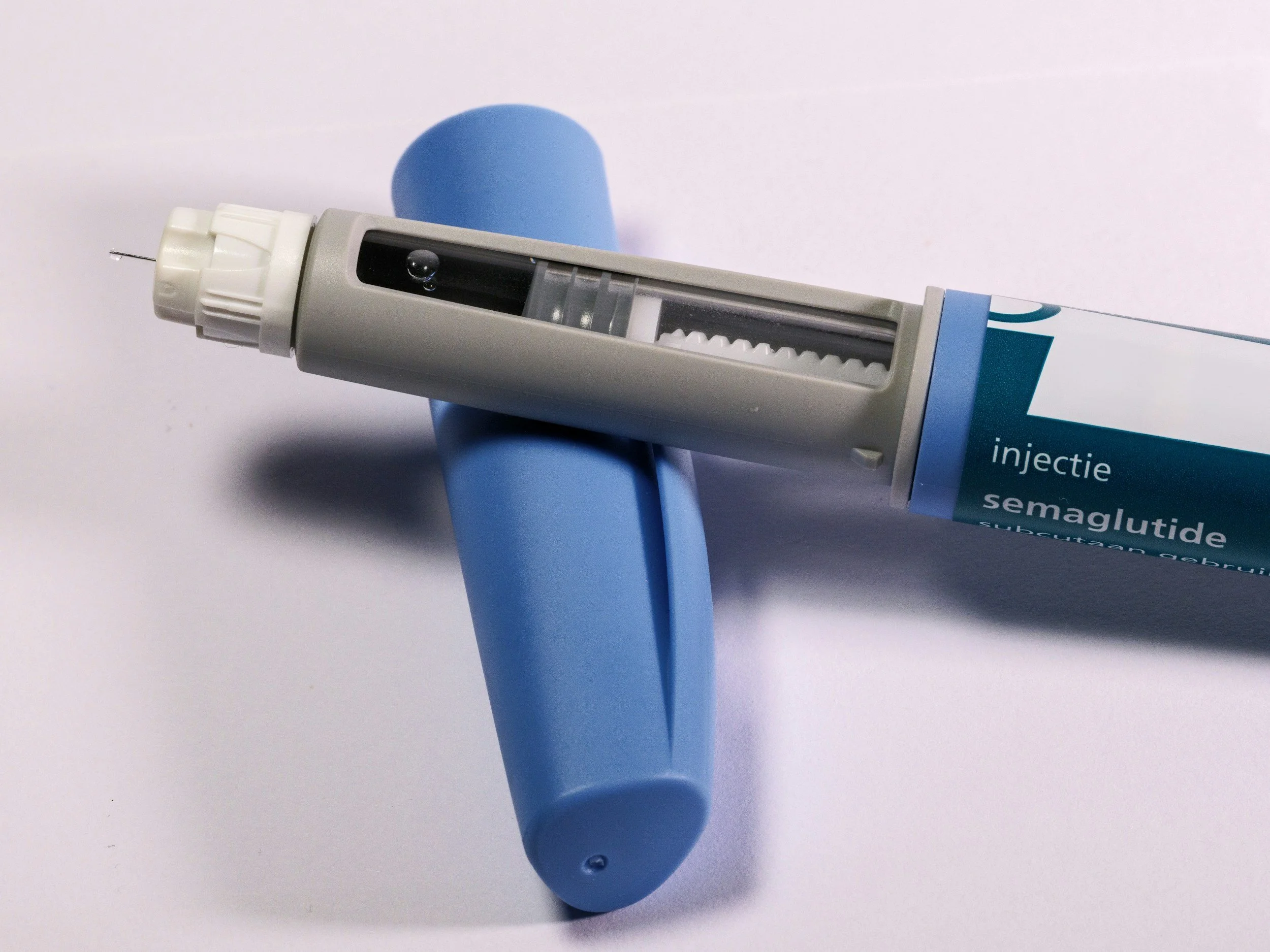
Ozempic, Wegovy, Mounjaro — these medications are genuinely remarkable. They work. You lost 50, 80, maybe 100+ lbs. Your bloodwork improved. Your energy came back. Your doctor is thrilled.
But now you're standing in front of the mirror looking at a body that still doesn't match how you feel. The stomach pouch. The saggy arms. The inner thighs that chafe. The face that somehow looks older than it did when you weighed more.
You're not ungrateful. You're not vain. You're just dealing with something a large number of people experience after major weight loss — and that almost nobody talks about until it's already happened.
This guide is everything we wish someone had told us. No surgeon ads, no product pitches, no "consult with your provider" non-answers. Just the real information.
Why rapid GLP-1 weight loss can make loose skin more noticeable
This is the part most articles skip, but it matters — because the way you lost weight directly affects your skin and your treatment options.
In many traditional diet-and-exercise weight loss journeys, weight comes off gradually over time, giving the skin more opportunity to adapt. You might lose 1–2 lbs per week over a year or two. Your skin has time to gradually tighten and adapt. The fat loss is uneven — you lose from some areas faster than others — and you're building muscle along the way, which fills in some of the space the fat left behind.
GLP-1 medications promote weight loss differently than lifestyle changes alone. Semaglutide and tirzepatide suppress your appetite at the brain level and slow your digestion. The result is faster, and your skin, that stretched over years may not fully retract when the underlying volume decreases quickly.
Three things happen at once that make GLP-1 skin laxity worse than regular dieting:
The speed outpaces your skin's ability to adapt. Collagen and elastin — the proteins that give your skin its snap-back ability — need time to remodel. Losing 50 lbs in 8 months doesn't give them that time. The skin stretches like a rubber band over years, but when the volume underneath shrinks quickly, the rubber band doesn't just snap back. Especially if you're over 35, when collagen production naturally declines.
GLP-1s cause muscle loss alongside fat loss. This is the part most people don't know. Like most forms of significant weight loss, GLP-1-related weight loss includes some loss of lean body mass alongside fat loss. Studies suggest lean mass can account for roughly 25–40% of total weight lost, though resistance training and adequate protein intake may help reduce that loss. Muscle provides underlying support for your skin — think of it as the scaffolding. When the scaffolding shrinks alongside the fat, the skin has even less structure to hold onto. This may partly explain why some people notice more skin laxity after rapid weight loss without strength training or muscle preservation strategies.
GLP-1 medications may directly affect skin quality. Emerging research suggests that GLP-1 receptor agonists may affect the density of collagen and elastic fibers in the skin itself. Some dermatologists and plastic surgeons report that patients after rapid GLP-1-related weight loss often describe thinner or more crepey skin, though it’s still unclear whether this is caused by the medications themselves, the speed of weight loss, loss of facial/body fat, age-related collagen decline, or a combination of factors.
The bottom line: if you lost significant weight on Ozempic, Wegovy, or Mounjaro, your loose skin isn't a failure of your body. It's a predictable consequence of how these medications work. And there are treatment options that can help, ranging from time and muscle rebuilding to surgical body contouring.
Where loose skin shows up most (and why)
Not all loose skin is created equal. Genetics, age, smoking history, sun exposure, pregnancy history, and the total amount of weight lost all influence how much loose skin develops.
The stomach and lower abdomen — In some people, excess lower abdominal skin and tissue can form a hanging fold called a pannus. It can cause rashes, infections, and chafing underneath. This is the area most likely to qualify for insurance coverage if it causes documented medical problems.
Upper arms — The infamous "bat wings." The skin on your upper arms has very little underlying muscle structure to begin with, so when the fat disappears, the skin hangs. This area is visible in short sleeves, which makes it one of the most emotionally impactful for patients.
Inner thighs — Loose skin here causes friction, chafing, and makes finding pants that fit properly nearly impossible. It's also one of the harder areas to address because thigh skin is thinner and heals differently.
Breasts — Weight loss deflates breast tissue significantly. The volume loss is compounded by the skin loosening, causing significant sagging.
Face and neck — This is "Ozempic face." It can create a more hollow or gaunt appearance that some people feel makes them look older or more tired. Facial volume loss is one of the most commonly reported cosmetic concerns after significant GLP-1-related weight loss.
Back and flanks — Rolls of loose skin along your bra line and sides are common after losing significant weight. These areas are often overlooked during consultations but significantly affect how clothing fits.
What actually works: your real options
Here's where we get honest. There are things that work, things that help a little, things that don't work at all, and a massive industry trying to sell you the second and third categories at the price of the first.
What works: surgical skin removal
Surgery is the only reliably effective way to remove significant loose skin. No cream, supplement, laser, or device will remove a hanging stomach apron or “bat-wing” arms. If your skin is significantly loose — meaning it hangs, folds over, or causes physical symptoms — surgery is the path that actually fixes it.
The most common procedures after GLP-1 weight loss:
Tummy tuck (abdominoplasty): $6,000–$15,000. Removes the loose skin from your abdomen, tightens the underlying muscles, and flattens your midsection. The extended version also addresses your flanks and hips. Recovery is 4–6 weeks. This is the single most popular post-weight-loss procedure.
360 body lift: $15,000–$35,000. When the loose skin goes all the way around — front, sides, back, and butt — a body lift addresses everything in one surgery. This is the go-to for people who lost 80+ lbs. Recovery is 6–8 weeks. It's a major surgery, but the results are dramatic.
Arm lift (brachioplasty): $5,000–$9,000. Removes the hanging skin from your upper arms. The trade-off is a scar that runs from your elbow to your armpit along the inner arm. The scar fades over 12 months and most patients say it's absolutely worth it versus living with bat wings.
Thigh lift: $5,500–$11,000. Fixes the inner and outer thigh skin. Inner thigh lifts are the most common and address chafing and friction.
Breast lift: $6,000–$14,000. Restores shape and position. Can add implants or fat grafting if you want to restore volume too. One of the highest satisfaction rates of any cosmetic procedure.
Facial volume loss after rapid weight loss (“Ozempic face”): $3,500–$12,000. Treatment options range from hyaluronic acid fillers and Sculptra (temporary but long-lasting) to fat grafting or facelift surgery. Fillers typically last 6–24 months depending on the product used. Fat grafting can produce longer-lasting results, though some transferred fat is naturally reabsorbed over time. A facelift addresses skin laxity and sagging but may still be combined with volume restoration
What helps a little: non-surgical skin tightening
If your loose skin is mild to moderate — not hanging, but just looking crepey or slightly lax — non-surgical treatments can improve things. Be realistic about what they can and can't do.
Morpheus8 (radiofrequency microneedling): The most popular non-surgical option right now. Uses tiny needles and radiofrequency energy to stimulate collagen production deep in the skin. Requires 3–6 sessions at $700–$2,000 per session depending on area and market. Best for mild laxity on the face, neck, arms, and abdomen. It can improve skin quality and tighten moderately, but it cannot remove hanging skin.
Ultherapy (focused ultrasound): Uses ultrasound energy to lift and tighten. FDA-cleared for brow, chin, and neck lifting. Less effective for body skin. One session at $2,000–$5,000. Results build over 2–3 months.
Laser skin resurfacing: Can improve texture and crepiness but doesn't address true laxity. Better as a complement to other treatments.
EmSculpt Neo / HIFEM: Builds muscle and reduces fat simultaneously. Won't fix loose skin directly, but building muscle can improve the appearance of mild laxity by providing more structure underneath. 4 sessions at $750–$1,000 each.
The honest truth about non-surgical treatments: they may produce modest improvement in skin tightness and texture in appropriately selected patients. They cannot replicate what surgery does. If your loose skin is significant enough that it bothers you daily, non-surgical treatments will likely leave you disappointed. Many patients spend $5,000–$10,000 on non-surgical treatments before ultimately getting surgery anyway — and wish they'd just gone straight to surgery.
What doesn't work: the stuff people try to sell you
Skin tightening creams and lotions. No cream has ever been shown to meaningfully tighten loose skin. Some contain retinol or peptides that can mildly improve skin texture, but the change is cosmetic and temporary. The loose skin is a structural problem — the collagen and elastin fibers are damaged. No topical product can rebuild them.
Collagen supplements. there is limited evidence that collagen peptides may modestly improve skin hydration and elasticity, but there is no strong evidence they can meaningfully tighten significant loose skin after major weight loss. Your body breaks down ingested collagen into amino acids and uses them wherever it wants — not necessarily in the skin you're trying to fix.
Body wraps, dry brushing, and compression garments. These may temporarily reduce the appearance of laxity through compression or mild dehydration, but the effect is temporary. Compression garments are important for post-surgical recovery, but they don't tighten skin on their own.
"Tighten loose skin" workout programs. Building muscle is genuinely important — it improves the underlying structure and can make mild laxity look better. But no amount of ab exercises will tighten a hanging stomach apron. If the skin is truly loose, exercise fills in some of the deflation but cannot shrink the excess skin itself.
We're not saying don't exercise or don't use good skincare. Both are worth doing for overall health. We're saying don't expect them to fix significant skin laxity, and don't spend thousands on products or programs that promise to "tighten loose skin naturally" when the science doesn't support those claims.
How to know if you're ready for surgery
Not everyone needs surgery, and not everyone is ready for it even if they do need it. Here's the honest checklist:
Your weight has been stable for at least 3 months. This is non-negotiable. Most surgeons require 3–6 months of weight stability (no more than 5–10 lbs fluctuation) before they'll operate. If you're still actively losing, the results may be suboptimal and you could need a revision.
You're done (or nearly done) with your GLP-1 medication changes. If your doctor is still adjusting your dose or you're planning to switch medications, wait until you've stabilized.
The loose skin affects your daily life. This can be physical — rashes, infections, chafing, difficulty exercising, trouble finding clothes that fit. Or it can be emotional — avoiding mirrors, not wanting to be intimate, feeling like the weight loss "didn't work" even though you know it did. Both are valid reasons.
You've tried giving your skin time. After weight loss, skin does continue to retract slowly for 6–12 months. Some people see meaningful improvement. Many don't, especially after 40 or after losing more than 50 lbs. But giving your body at least 6 months before pursuing surgery is reasonable.
You can handle the recovery. A tummy tuck means 4–6 weeks of limited activity. A body lift means 6–8 weeks. You'll need help for the first week — someone to drive you, help with meals, assist with daily tasks. Make sure your life situation allows for real recovery.
You understand the financial commitment. Most body contouring is not covered by insurance (panniculectomy is sometimes the exception). You're looking at $8,000–$35,000+ depending on what you need. Financing is available — 67% of cosmetic surgery patients use it — but you need to be clear-eyed about the cost.
How to find a surgeon who actually specializes in this
This matters more than most people realize. Many surgeons are now seeing increasing numbers of post-GLP-1 patients, and experience with massive-weight-loss body contouring is especially valuable. The fat loss pattern, tissue quality, and skin thickness are distinct. Ideally, look for a surgeon with substantial experience in post-weight-loss body contouring procedures.
Check for ABPS board certification. The American Board of Plastic Surgery is the only board that matters. "Board certified" alone can mean anything — there are dozens of minor boards. Look specifically for ABPS certification on their website or verify at abplasticsurgery.org.
Ask about their post-weight-loss experience specifically. How many post-GLP-1 patients have they treated? How many body lifts do they do per month? Ask to see before-and-after photos of patients who started at a similar weight and had a similar weight loss method to yours.
Consult with 2–3 surgeons. This is normal and expected. No surgeon will be offended. Each will give you a different perspective on what procedures you need, how to stage them, and what results are realistic. Comparing these opinions helps you make a better decision.
Pay attention to how the consultation feels. A good surgeon listens more than they talk during the first visit. They ask about your goals, concerns, and lifestyle. They're honest about limitations. They don't pressure you to book surgery that day. They give you a clear, written quote with everything included — surgeon fee, anesthesia, facility, garments, follow-ups.
Red flags: Any surgeon who quotes you over the phone without seeing you. Anyone who offers a "special deal" if you book today. Anyone who isn't specifically ABPS board certified. Anyone who dismisses your questions or makes you feel rushed.
The GLP-1 timing question: when to stop Ozempic before surgery
This comes up constantly, and the answer is that pre-operative GLP-1 guidance is evolving. Some surgeons and anesthesiologists recommend temporarily holding GLP-1 medications before surgery because they can delay gastric emptying and increase aspiration risk under anesthesia. The exact timing varies based on the medication, dose, procedure, and current anesthesia guidelines.
Your prescribing doctor and your surgeon will coordinate the timing. Some practices still recommend stopping weekly GLP-1 medications 1–2 weeks before surgery
The question everyone worries about: will I gain weight during the gap? In practice, a 4–8 week break from GLP-1 medication rarely causes significant regain if your eating habits are stable. Some patients notice temporary appetite changes or mild weight fluctuation during the medication pause. If you've built solid eating habits during your weight loss, those habits carry you through the break.
What recovery actually looks like
We have a full week-by-week recovery guide, but here's the honest summary:
Week 1 is the hardest. Pain, swelling, drains, limited mobility. You need help with everything. Most people describe it as "worse than expected but manageable."
Weeks 2–3, you turn the corner. Drains come out, pain shifts from sharp to achy, you can do light desk work from home.
Weeks 4–6, you return to most normal activities. Swelling is still present but decreasing. You start seeing your new contour emerge.
Months 2–3, you resume exercise and start scar management.
Months 6–12, final results become visible. Scars fade from red to white. Most patients say this is when the emotional payoff of the entire journey hits — when their outside finally matches how they feel inside.
The bottom line
Loose skin after Ozempic is not a failure. It's not something you did wrong. It's a predictable, treatable consequence of rapid weight loss
Your options range from doing nothing (completely valid if it doesn't bother you), to non-surgical treatments (for mild laxity), to surgical skin removal (the only solution for significant loose skin). The right choice depends on how much skin you have, where it is, how much it affects your life, and what you can afford.
Whatever you decide, take your time. Get informed. Consult with multiple surgeons if you go that route. And don't let anyone — not a surgeon, not a medspa, not an Instagram ad — pressure you into a decision before you're ready.
You did the hardest part already. The rest is just information, planning, and deciding what's right for you.
This guide is for informational purposes only and is not medical advice. Always consult with a board-certified plastic surgeon for personalized recommendations.